Reading Comprehension- Signals and Systms . Week One
Reading Comprehension- Signals and Systms . Week One
11 González Hernández Erick Leonardo terms
-Use the "First week glossary" document (see below) for feeding your glossary.
-Add 5 extra words or concepts that are relevant to you, from your readings.
-Make sure your words or concepts used have all the requirements (definition, pronunciation, example, translation, image, etc)
- Analog frecuency.
- Adverb
- In an electrical signal, the voltage, current, or frequency of the signal may be varied to represent the information. Any information may be conveyed by an analog signal; such a signal may be a measured response to changes in a physical variable, such as sound, light, temperature, position, or pressure.
- Example: Is the loudspeaker, which is used to amplify the sound so that it is heard by a large audience.
- es: Frecuencia analógica.

- Continuous amplitude
- Adverb
- A signal of continuous amplitude and time is known as a continuous-time signal or an analog signal. This (a signal) will have some value at every instant of time.
- Example: sine wave, cosine wave, triangle wave.
- es: Amplitud continua.
- Continuous-time signals
- Adverb
- That is defined for all time t contained in some interval on the real line. For historical reasons, CT signals are often called analog signals.
- Example: If you were monitoring the temperature of a room, you would be able to take a measured value of temperature at any time.
- es: Señal de tiempo continuo

- Digital signal
- Noun
- The digital signal is a type of signal in which each sign that encodes its content can be analyzed in terms of some quantities that represent discrete values, instead of values within a certain range.
- Example: We find them in communication buses, in clock signals of electronic devices, PWM signals to modulate power in an element, among others.
- es: Frecuencia digital.
- Discrete-Time Signal
- Adverb
- Is a time series consisting of a sequence of quantities. Unlike a continuous-time signal, a discrete-time signal is not a function of a continuous argument; however, it may have been obtained by sampling from a continuous-time signal.
- Example: If you were monitoring the temperature of a room, you would be able to take a measured value of temperature at any time.
- es: Señal de tiempo discreto.
- Electrical signal
- Noun
- An electrical signal is a type of signal generated by some electromagnetic phenomenon. These signals can be of two types: analog, if they vary continuously over time, or digital if they vary discretely.
- Example: The microphone converts sound waves into a variable voltage that can be measured between the microphone wires.
- es: Señal eléctrica.

- Resistance
- Noun
- Resistance is a measure of the opposition to current flow in an electrical circuit.
- Example: Current must struggle to flow through the small coils of a toaster, enough to generate heat that browns bread.
- es: Resistencia.

- Signal energy
- The terms signal energy and signal power are used to characterize a signal. They are not actually measures of energy and power. The definition of signal energy and power refers to any signal ( )tx , including signals that take on complex values.
- Example: A signal having only one square pulse is energy signal.
- es: Señales de energías.
- Signals
- Noun
- A signal can also be the variation of an electric current, or another physical quantity that is used to transmit information.
- Example: You can check the strength of the signal on your TV.
- es: Señales

- Systems
- Noun
- A group of related hardware units or programs or both, especially when dedicated to a single application.
- Example: The system is reliable in operation, durable and easy installation.
- es: Sistemas

- Voltage
- Noun
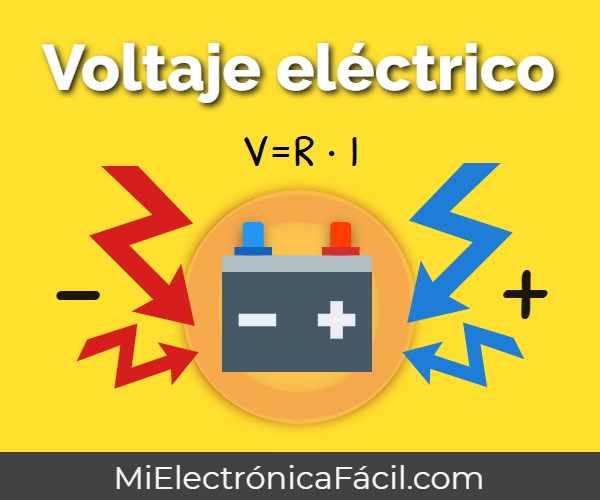
- The electrical voltage or potential difference is a physical quantity that quantifies the electrical potential difference between two points. It can also be defined as the work per unit charge exerted by the electric field on a charged particle to move it between two determined positions.
- Example: Energy that reaches your house and you can turn on a light bulb.
- es: Voltaje.